Varicocele
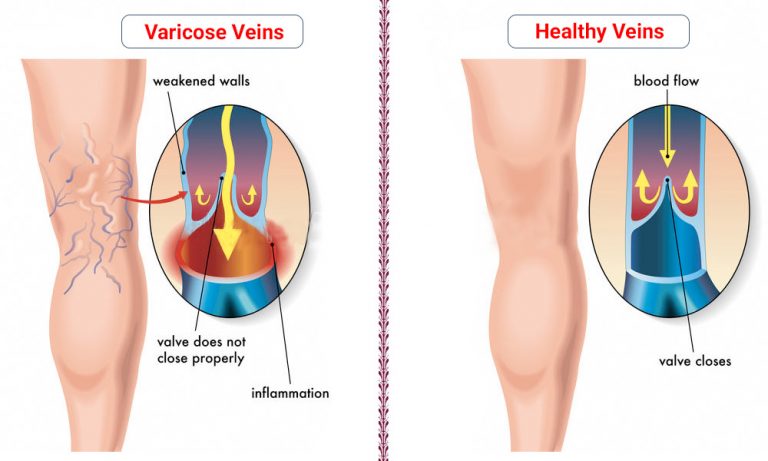
These are the abnormal visible dilated tortuous superficial veins just beneath the skin commonly seen on the thigh, around knee, calf, leg and around ankle region.
Varicose veins are twisted, enlarged veins. Any superficial vein may become varicosed, but the veins most commonly affected are those in your legs. That's because standing and walking upright increases the pressure in the veins of your lower body.
For many people, varicose veins and spider veins — a common, mild variation of varicose veins — are simply a cosmetic concern. For other people, varicose veins can cause aching pain and discomfort. Sometimes varicose veins lead to more-serious problems.
Q: Understanding normal leg veins!! What causes Varicose Veins??
Veins carry blood vessels from legs back to the heart.
There are three types of veins in the legs.
- 1. Superficial veins: located just below the skin surface and these are the veins that may develop into varicose veins.
- 2. Deep leg veins: located deep to the muscle muscular layer - You cannot see them
- 4. Communicating veins or perforators: take blood from the superficial veins into the deep veins.
Normally these veins maintain unidirectional flow of blood i.e from superficial veins to deep veins and from deep veins to heart due to multiple valves located at regular intervals. These Valves also prevent back flow of blood in the wrong direction.
What causes varicose veins?
aching pain when an individual has been standing or sitting for long periods of time and pressure builds up on the affected veins. Typically, painful varicoceles are prominent in size.
Fertility Problems:
Varicose veins occurs when this normal mechanism of venous blood flow fails.
Can be primary : occurs due to faulty function of vein valves leading to reversal of blood flow i.e from deep to superficial veins and peripheral pooling of blood in the superficial veins. This results in increased pressure in these superficial veins and leads to prominent, tortuous and dilated varicose veins
Can be secondary : occurs due to some pathology in deep vein of legs like DVT (deep veins thrombosis) or pathology in abdominal veins like external compression on iliac veins (May-Thurners syndrome or abdominal tumor)
Who develops varicose veins?
Who Is at Risk for Varicose Veins?
There may be a hereditary component. Women are more likely to suffer from varicose veins and
up to 50% of women may be affected.
Other risk factors are:
- 1. obesity or Being overweight
- 2. jobs with prolonged standing
- 3. Deep vein thrombosis or DVT
- 4. Leg injury
- 5. Hormonal factors including puberty, pregnancy, menopause, the use of birth control
pills.
- 6. Increasing age
What are the Common Signs and Symptoms in patients suffering from
varicose veins??
- Ugly looking tortuous and bulging veins on the thigh, around knee and ankle
- Feeling of Heaviness and restlessness in legs at the end of the day
- Swelling and fatigue in legs
- Aching, cramping or leg pain
- Change in Skin colour or rashes
- Non healing Ulcers or sores usually around ankle or in lower leg
- Restless legs
- Itching over the skin (venous eczema)
Possible complications of varicose veins include:
- Long standing non healing ulcers or wounds or sores
- Inflammation of the vein with acute onset of pain (thrombophlebitis)
- Discoloration and eczematous skin changes with hardening (lipodermatosclerosis)
- Spontaneous bleeding from the varicose veins.
What tests can be used to investigate varicose veins?
A very and reliable test to diagnose and to direct treatment planning is Duplex or colour
Doppler examination which a kind of sonography or ultrasound only with added Doppler mode.
It is painless, non invasive and totally non harmful test
It is best that the doctor who is undertaking your treatment carries out the scan or test by
himself so as to enable him to determine exactly what treatment is best for you.
why do I need treatment for varicose veins?
Varicose veins are not endangers to life but are very important factor for poor quality of
your life style. You may want to have treatment for one of the following reasons:
- Cosmetic reasons: to get rid of non symptomatic ugly looking leg veins - Lets show off
your legs again.
- Symptomatic relief : if symptoms like swelling, restless legs, heaviness and cramps in
legs are troubling your day to day life
- Complications management : treatment of varicose veins is necessary if they complicate
in terms of Non healing ulcer, Lipodermatosclerosis, Thrombophlebitis or spontaneous
bleeding episode
What treatment options are available?
Old or traditional methods: OPEN SURGERY: this type of treatment is not done by us, but is
done by General Surgeons. Surgery is done by either stripping the vein along the whole
length or by multiple ligations or tying of the vein along the course and ligation of
perforators
New or Endovenous methods: we, Interventional Radiologist use the endovenous route to achieve
ablation of the varicose veins Jaipur vascular & interventional radiology clinic (JVIR) uses
three main methods of vein ablation or destruction:
- a) Laser ablation
- b) Radiofrequency ablation (RF)
- c) Foam sclerotherapy
A.ENDOVENOUS THERMAL ABLATION: both Laser ablation and RFA ablation are part
of common mode of treatment i.e Endovenous Thermal ablation which involves the ablation or
destruction of the native vein by means of thermal energy while Laser or RFA are the two
different modes to produce the thermal energy.
It simply involves making a small cut (2mm) on the skin and passage of long wire like
catheter or probe into the vein. This catheter when connected to generator produces
heat, as heat is delivered; the vein wall gets destroyed and shrinks resulting
in sealed closed vein. The catheter is then slowly removed and an ultrasound scan is done to
check the successful completion of the procedure.
This is the latest and most recommended procedure for the treatment of varicose veins at most
of the centers across the world.
B Foam sclerotherapy: this is not used as primary treatment for the varicose
veins but is useful for any residual varicosities remaining at follow-up after the
Endovenous Thermal ablation of the varicose veins.
This procedure is done under local anaesthesia and under USG guidance. It involves the
injection of a liquid sclerosant that has been mixed with air to make foam it to the
varicosities in order to block the vein. This is followed by the application of a
compression stocking .
What are the benefits of ENDOVENOUS ABLATION vs. OPEN SURGERY?
- Rapid relief from symptoms
- Less or minimal invasive surgery
- No rest, no loss of work days post surgery – FAST RECOVERY
- No big surgical incision - only a small nick that does not need stitch.
- Less risk, Less complications
- Much less pain during recovery
- More effective and more safe
- Minimal or no blood loss during surgery
- NO SCAR
Who Is at Risk for Varicose Veins?
There may be a hereditary component. Women are more likely to suffer from varicose veins and up to 50% of women may be affected.
Other risk factors are:
- 1. obesity or Being overweight
- 2. jobs with prolonged standing
- 3. Deep vein thrombosis or DVT
- 4. Leg injury
- 5. Hormonal factors including puberty, pregnancy, menopause, the use of birth control pills.
- 6. Increasing age
- Ugly looking tortuous and bulging veins on the thigh, around knee and ankle
- Feeling of Heaviness and restlessness in legs at the end of the day
- Swelling and fatigue in legs
- Aching, cramping or leg pain
- Change in Skin colour or rashes
- Non healing Ulcers or sores usually around ankle or in lower leg
- Restless legs
- Itching over the skin (venous eczema)
Possible complications of varicose veins include:
- Long standing non healing ulcers or wounds or sores
- Inflammation of the vein with acute onset of pain (thrombophlebitis)
- Discoloration and eczematous skin changes with hardening (lipodermatosclerosis)
- Spontaneous bleeding from the varicose veins.
A very and reliable test to diagnose and to direct treatment planning is Duplex or colour Doppler examination which a kind of sonography or ultrasound only with added Doppler mode. It is painless, non invasive and totally non harmful test
It is best that the doctor who is undertaking your treatment carries out the scan or test by himself so as to enable him to determine exactly what treatment is best for you.
Varicose veins are not endangers to life but are very important factor for poor quality of your life style. You may want to have treatment for one of the following reasons:
- Cosmetic reasons: to get rid of non symptomatic ugly looking leg veins - Lets show off your legs again.
- Symptomatic relief : if symptoms like swelling, restless legs, heaviness and cramps in legs are troubling your day to day life
- Complications management : treatment of varicose veins is necessary if they complicate in terms of Non healing ulcer, Lipodermatosclerosis, Thrombophlebitis or spontaneous bleeding episode
Old or traditional methods: OPEN SURGERY: this type of treatment is not done by us, but is done by General Surgeons. Surgery is done by either stripping the vein along the whole length or by multiple ligations or tying of the vein along the course and ligation of perforators
New or Endovenous methods: we, Interventional Radiologist use the endovenous route to achieve ablation of the varicose veins Jaipur vascular & interventional radiology clinic (JVIR) uses three main methods of vein ablation or destruction:
- a) Laser ablation
- b) Radiofrequency ablation (RF)
- c) Foam sclerotherapy
A.ENDOVENOUS THERMAL ABLATION: both Laser ablation and RFA ablation are part of common mode of treatment i.e Endovenous Thermal ablation which involves the ablation or destruction of the native vein by means of thermal energy while Laser or RFA are the two different modes to produce the thermal energy.
It simply involves making a small cut (2mm) on the skin and passage of long wire like catheter or probe into the vein. This catheter when connected to generator produces heat, as heat is delivered; the vein wall gets destroyed and shrinks resulting in sealed closed vein. The catheter is then slowly removed and an ultrasound scan is done to check the successful completion of the procedure.
This is the latest and most recommended procedure for the treatment of varicose veins at most of the centers across the world.
B Foam sclerotherapy: this is not used as primary treatment for the varicose veins but is useful for any residual varicosities remaining at follow-up after the Endovenous Thermal ablation of the varicose veins.
This procedure is done under local anaesthesia and under USG guidance. It involves the injection of a liquid sclerosant that has been mixed with air to make foam it to the varicosities in order to block the vein. This is followed by the application of a compression stocking .
- Rapid relief from symptoms
- Less or minimal invasive surgery
- No rest, no loss of work days post surgery – FAST RECOVERY
- No big surgical incision - only a small nick that does not need stitch.
- Less risk, Less complications
- Much less pain during recovery
- More effective and more safe
- Minimal or no blood loss during surgery
- NO SCAR
Get appointment for any problem
Copyright© 2019. JVIR All right reserved.