What is PAD?
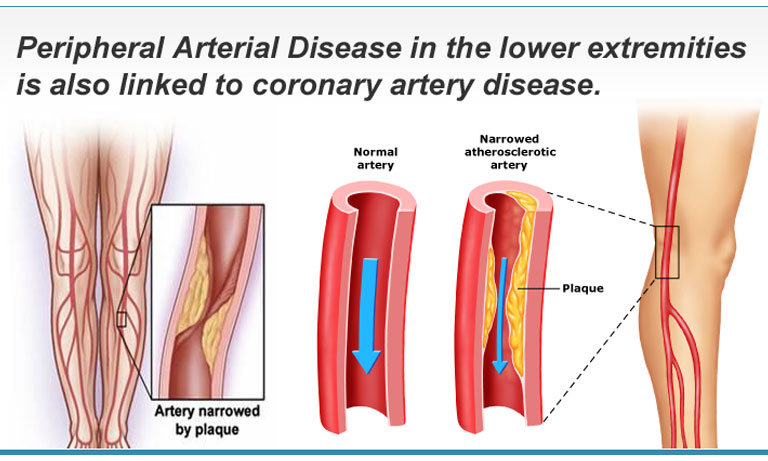
Peripheral arterial disease also known as peripheral vascular disease, characterized by narrowing of the blood vessels called arteries which carries blood from heart to peripheral organs like lower limbs or legs.
This mainly occurs due to narrowing of the lumen by plaque or atheroma, hardening of the arterial walls by calcium deposition and loss of elasticity or blockade of the lumen by the blood clot (Thrombus)
If you have PAD, your arteries to heart and brain are also vunerable and you are at greater risk of suffering a heart attack or stroke.
Why PAD occurs? & How is it caused?
Risk factors for PAD includes:
- Smoking (the biggest cause)
- Diabetes
- High blood pressure
- History of stroke or heart disease
- Obesity
- Family history
- Increasing Age (>50 yrs)
- Kidney disease
- Asthma or COPD
- High fat diet/high cholesterol
- Little or no exercise
How do I know if I have a PAD? & What are the possible signs of PAD??
Intermittent claudication : patient feels cramp like pain or tiredness in both legs, usually in the calf region, but can occur in the thighs or buttocks. Pain comes while walking, climbing upstairs or during exercise and go away with rest.
Rest pain: patient feels pain while resting, usually at night, sometimes whole day depending on the severity of the disease. This pain sometimes feels better while hanging the legs down by the side of the bed. This gives patient “NO SLEEP” at night.
NOTE: PAIN of PAD usually gets aggravated in winters, in air conditioner and even under fan when cols air touches the affected part
Coldness or temperature difference: affected leg or foot feels colder than the other
Change of colour. The skin appears pale, more shinny, may look blue and sometimes blackening occurs
Loss of hair and nail changes: The affected area shows loss of hair and poor growth of nails.
Poor healing: patient experiences poor or delayed healing of small cuts or wounds in the leg, sometimes patient presents with non healing ulcer of the foot region.
Sensory dysfunction : feeling of numbness or burning sensation in legs and feets, sometimes calf atrophy also noted
Gangrene. This means blackening and shrinking of the affected area usually toes, sometimes foot also, due to death of the tissues because of long standing little or poor blood or oxygen supply. This can lead to amputation of toes, feet or legs.
How to confirm the PAD?? & Advise some medical test!!
- If you are suffering from any of the above symptoms, meet Dr. Praveen Singhal, color Doppler expert in Jaipur to get earliest diagnosis.
- Most simple test to diagnose PAD is Duplex Ultrasound examination – this is like an routine ultrasound or sonography test but with added color doppler facility
- ANGIOGRAPHY: diagnosis is usually establish on color doppler examination, but for treatment planning and detailed anatomical work up, angiography is needed. This can
- 1. Non invasive Angiography by CT scan (CT angiography) or by MRI scan (MR angiography): these modalities use to prepare a 3D anatomical reconstruction map of the arterial tree of the abdomen and lower limb
- Invasive Digital Subtraction Angiography (DSA): 2. this is both diagnostic test and therapeutic intervention in the single sitting
It hardly takes 15 to 20 minutes and done by myself only. I will be happy to answer any questions you may have about the scan.
What are the treatment options?
Self-help measures: what I can do?
The important concern for patient suffering from PAD is that apart from this disease either they have a past history or they are at increased risk of having a heart attack or stroke. So below mentioned self help measures are important aspect of the treatment schedule for PAD:
- Stop smoking immediately and completely – No IF & BUT at all, also stop tobacco in all forms
- Exercise regularly – walking is the best exercise.
- Consult your physician for best control your high blood pressure and high blood sugar levels if you are diabetic and hypertensive
- Healthy diet : very important aspect as it can control your sugar levels, can control bad cholesterol levels, helps in weight reduction and also to keep blood pressure in control (low salt diet)
- Reduce your weight if you are obese
- Take care of your feets : wear proper shoes while walking or exercise, avoid trauma to feets, be utmost careful while cutting your nails, regular inspect your feets and web spaces between fingers to seen any minor cuts or abrasions, if found do not take them lightly
What JVIR can do?
Treatment strategy varies from patient to patient and according to clinical scenario like type of pain, color doppler findings, presence of non healing ulcer, status of the limb etc.
JVIR doctors have clinical and diagnostic expertise for the correct & detailed diagnosis about your medical condition so that accurate & effective treatment and management can be offered to you.
Treatment options include:
- Medical management: this includes drugs to
- 1. Control your blood pressure levels
- 2. Control your blood sugar levels
- 3. Lower the bad cholesterol
- 4. Antiplatelet drugs to prevent blood clots (thrombosis) formation in arteries
- 5. Vasodilator agents to ,cause of DVT, its duration etc.
- Surgical management: depending upon clinical scenario and varying from person to person, following options offered to a patient either alone or in combination:
- 1. Angioplasty ± Stenting - : it is a technique to opens up the blocked or narrowed blood vessels with the help of very small balloon with or without applying stent to follow. This is a minimally invasive endovascular procedure without any major incision to body
- 2. Bypass surgery – this is a open surgical procedure in which a flexible pipe or vein (graft) is used to bypass the diseased segment by connecting graft to the artery above and below the blocked section.
- 3. Surgical removal of the affected part as a whole (called as amputation) or partially (called as debridement)
Get appointment for any problem
Copyright© 2019. JVIR All right reserved.