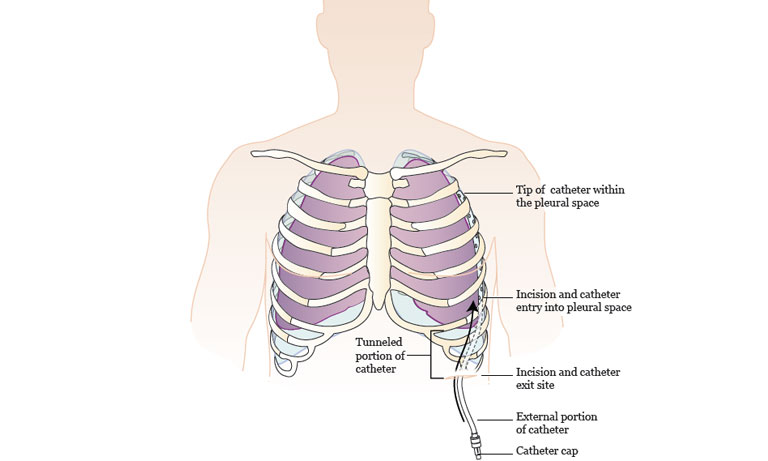
Drainage Catheter Placement
What is Percutaneous
Radiofrequency Ablation?
Percutaneous radiofrequency ablation is a new way to treat some tumors. Percutaneous
means through the skin. Radiofrequency refers to the radio waves used in this
treatment. Ablation means tissue destruction. Radio waves create heat to destroy the
tumor.
Using ultrasound or CAT scan guidance, the radiologist puts a probe through the skin
and directly into the tumor. The radio waves create heat in the tissue and the heat
kills the cells in a small area around the probe.
Each RF ablation treatment is unique. The location, type and size of the tumor, as
well as history of chemotherapy or radiation are taken into account. RF treatment
can be performed for some liver tumors; cancers that have spread to the bones
causing bone pain; as well as some lung and kidney tumors.
Diagnosis
During Your RF Ablation Treatment
Prior to the procedure, you will be required to have current blood work, an EKG, and a Chest
X-ray. The procedure is performed with CT guidance in the Radiology department. You will be
admitted through the Same Day Stay Unit the morning of your procedure and stay overnight.
You will meet an Anesthesiologist prior to your procedure who will keep you sedated.
After Your RF Ablation Treatment
Post-procedure side effects are often due to anesthesia rather than the procedure. Mild
flu-like symptoms with low grade fever and muscle aches may occur in about one-third of
patients who have RF ablation. Symptoms may last three to five days following ablation of a
liver tumor. Occasionally following a liver ablation, some people may feel pain in another
part of their body, such as the shoulder. Minor discomfort at the ablation site is common
and can be relieved with pain medication.
Potential Risks
Complications from RF ablation are uncommon, occurring in about 5 percent or less of
patients. There is a small risk of infection at the insertion site that can be treated with
antibiotics. There is a minor risk of lung collapse if the tumor being treated is in the
lung or liver.
Almost 30-40% population is suffering from this condition due to multiple factors especially due to the sedentary lifestyle. Women have more tendency to develop varicose veins mainly during pregnancy which results in pressure on the main vein called Large Vena Cava by the gravid uterus that results in the increment in venous pressure in legs and results damaged to the valve.
Get appointment for any problem
Copyright© 2019. JVIR All right reserved.